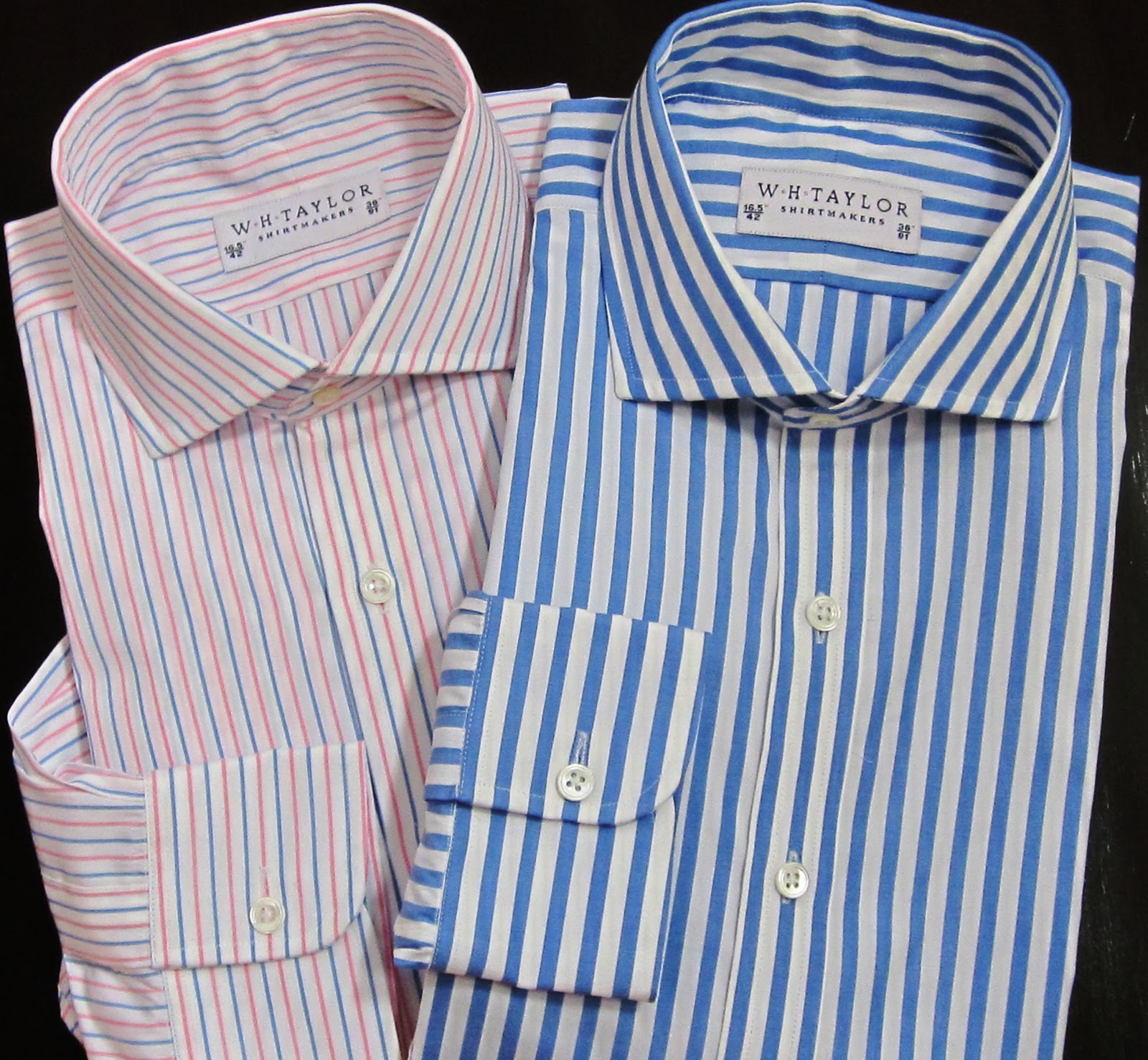
As temperatures rise, so does my ire. Southern California has experienced in the last several days a sweltering Indian summer, minus the flies, dreadful odours, and dirty street urchins. Cooler weather will return soon enough and with it, the winter rains.
In the meantime the changing season is a good opportunity to reevaluate your dress shirt collection and maybe enjoy a G&T or three on the verandah. But do not strain yourself. Keep it simple and classic. The attention given to a man’s choice of suit and shoes should
not extend to his dress shirts. Remember: men’s dress shirts are disposable. Don’t over-think it.
Let me set you straight about collars. The only acceptable shirt collar for orifice wear is the English spread collar, or cutaway collar. This pertains only to those in banking, finance, manufacturing, higher management, and wine. If you are a lawyer or creative type (i.e., media, advertising, public relations, government, and accounting) you do not actually work at a real job, as you are well aware, so the type of shirt you wear is irrelevant. Nobody cares. Neither should you.
Now let’s discuss cuffs. Double cuffs are common (in both senses of the word) and I avoid them for all but the most formal of occasions. You should too. The Americans call them ‘French cuffs,’ which, considering their dislike of all things French, is rather puzzling. In this country double cuffs are the mark of the parvenu, the grasping outsider trying to climb the social ladder. Because they are thought to signify a measure of sartorial sophistication, double cuffs adorn the wrists of every gauche Southern farm boy, urban ragamuffin, foreign MBA, and Noo Yawk shyster in corporate America. Avoid them if you can.
There is an alternative. Try cocktail cuffs. They are infinitely more suitable, and, as it happens, a growing favourite of mine. Cocktail cuffs, as you know, are also called turnback cuffs or flowback cuffs; I prefer the first name for obvious reasons. The photographic image (above) depicts film director Terence Young, ex-Irish Guards officer and director of the first, second, and fourth James Bond films:
Dr. No,
From Russia With Love, and
Thunderball. Note the cocktail cuffs, for which Young was known and which were applied to the on-screen Bond character in the early films. There are several shirt makers that still offer the cocktail cuff, from the well-known to the more obscure, and if you decide to pick up one or two shirts with these distinctive cuffs I am certain you will be quite pleased with yourself.
One last thing. What are the origins of the term ‘cocktail cuff’? Interesting question. Archival research reveals that a number of prominent figures on the London cocktail circuit in the 1930s were credited with developing the distinctive cuff. Cuff links, it was noticed, invariably produced an annoying clattering sound on the Egyptian granite tops of hotel bars and became entangled in ladies’ silk undergarments. The cocktail cuff was seized upon as the perfect solution. It does away with the need for fussy cuff links, allowing a chap to enjoy his evening cocktail in silence without irritating his neighbours, for which it was designed, and permitting him to go forth in bold thrusting cuff and make love to his woman with rough Tweedlike efficiency.
 Dress shirts are disposable and should not be a significant feature of a man's wardrobe. They are background. Not for me, the modern fashion for shirts in loud colours and curious checked patterns. A recent quantitative analysis of my business shirts revealed approximately 67% are strong white, with smaller percentages devoted to ivory, ecru, blue, pink, and various stripes. I have two striped shirts with a white collar (never with white cuffs!). I have a few checked shirts, too, but I tend to avoid them for office wear. Here is what Boyer says on the matter: